
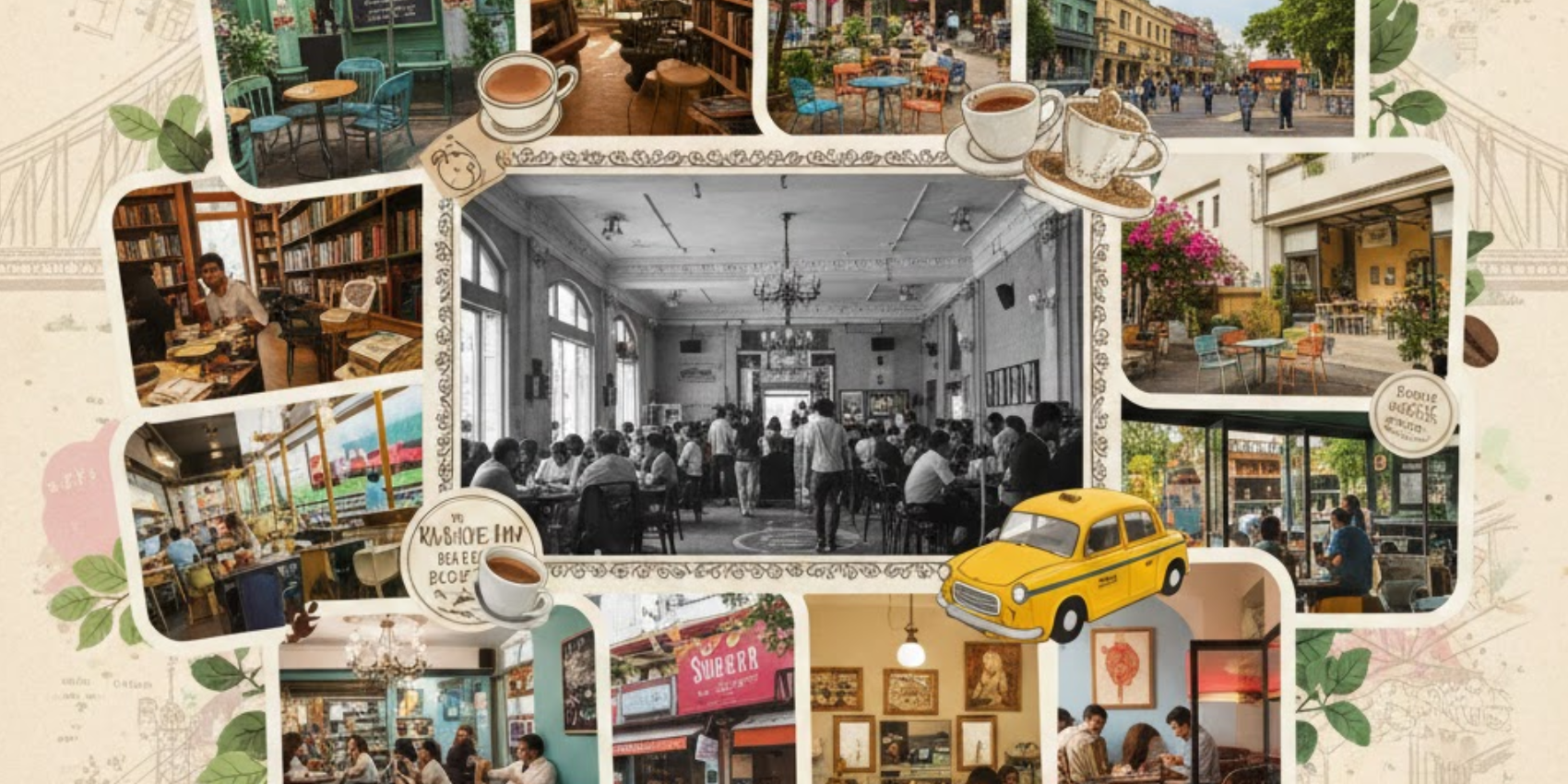
Food Stalls in Kolkata are not merely places of commerce but are the pulsing, aromatic heart of the “City of Joy,” representing a democratic culinary theater where every street corner offers a masterclass in flavor, history, and social cohesion. Exploring Kolkata covers food stalls in Kolkata too.
To walk through the labyrinthine lanes of North Kolkata or the bustling office districts of Esplanade is to witness a gastronomic heritage that has been simmering for centuries, blending the royal influences of the Mughals, the colonial imprints of the British, the industrious spirit of Chinese immigrants, and the humble, soul-satisfying traditions of rural Bengal.
In the early morning mist of the Maidan, the day begins with the rhythmic clinking of spoons against heavy iron pans as vendors prepare Kochuri and Alur Dom, a staple breakfast where deep-fried, lentil-stuffed bread meets a spicy, slow-cooked potato gravy that warms the soul of the city’s early risers, from joggers to tram drivers.
As the sun climbs higher, the focus shifts to the “Office Para” or business districts like Dacres Lane now James Hicky Sarani where a legendary ecosystem of stalls like Chitto Babur Dokan serves what many consider the world’s best budget lunch: a hearty chicken stew with toasted bread or a crispy, ghee-fried fish fillet that melts in the mouth. Food stalls in Kolkata are very famous.
This lane is a microcosm of Kolkata’s spirit, where high-ranking corporate executives in tailored suits stand shoulder-to-shoulder with daily wage laborers, both equally enthralled by the steam rising from a shared pot of ghugni—a spicy yellow pea curry topped with chopped onions and a squeeze of lime.
The city’s identity is perhaps most famously tied to the Kathi Roll, a creation of the iconic Nizam’s that has since spawned thousands of stalls across every neighborhood, where skewered, charcoal-grilled meats are wrapped in a flaky, oil-slicked paratha with a dash of lime and green chilies, providing a portable feast that defines the city’s fast-paced yet flavor-obsessed lifestyle.
No discussion of Kolkata’s stalls is complete without the Phuchkawala, a solitary figure standing behind a mountain of hollow, crispy semolina spheres, who performs a ritual of speed and precision as he fills each shell with a spicy mashed potato mixture and dunks it into a tangy, tamarind-infused water that provides a literal explosion of taste.
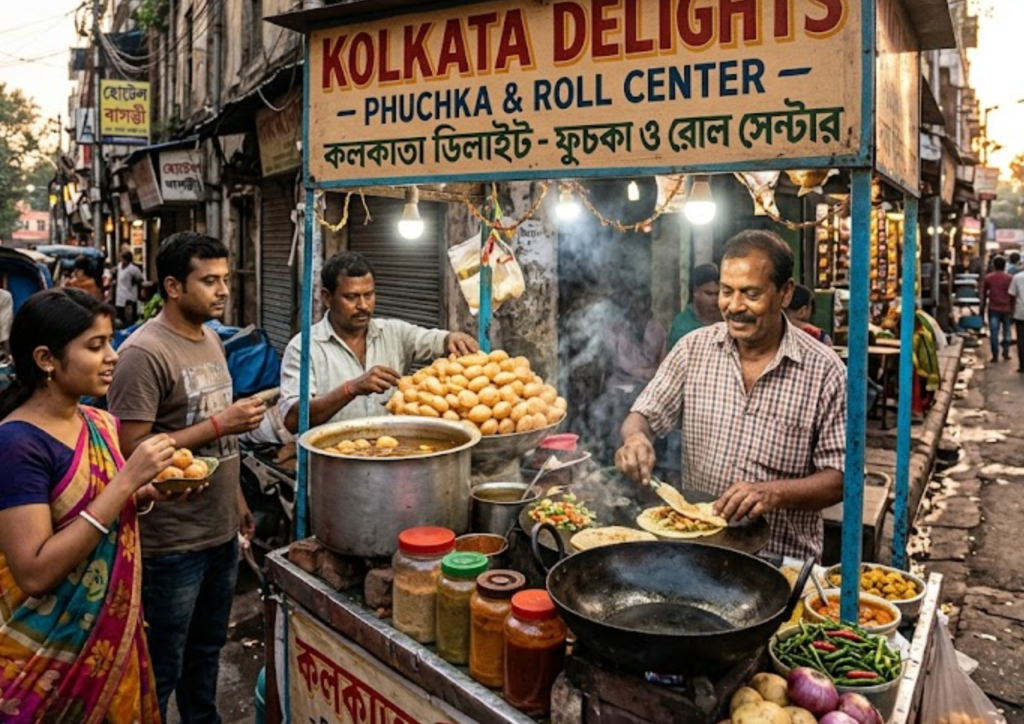
More about Food Stalls in Kolkata.
The Phuchka is a cult object in Kolkata, fiercely defended as superior to the pani puri or golgappa of other cities due to its unique blend of gandharaj lebu (aromatic lime) and secret spice mixes. As evening falls, the air turns smoky and fragrant with the scent of Telebhaja the quintessential Bengali deep-fried fritters. Stalls like the century-old Kalika in College Street become pilgrimage sites for those seeking Aloor Chop, Beguni (eggplant fritters), or the complex Mochar Chop (banana flower croquettes), often paired with a paper cone of Jhal Muri.
This latter snack, a medley of puffed rice, mustard oil, peanuts, and fresh aromatics, is the soundtrack of Kolkata’s streets, its preparation a percussive symphony of a tin can being shaken by a vendor who knows exactly how much heat each regular customer can handle.
In the northern reaches of the city, the Chinese influence takes center stage at the Tiretti Bazar morning market and the numerous “Chowmein” stalls where Indo-Chinese fusion was born, offering spicy, wok-tossed noodles that have become a local staple.
The sweetness of the city is anchored by its Mishti stalls, where the legendary Rasgulla and Mishti Doi sit in earthen pots, representing a legacy of confectionery that dates back to the Portuguese introduction of cottage cheese.
These stalls are more than just eateries; they are social hubs where “adda” (intellectual gossip) flourishes, fueled by countless clay cups of Bhnaarer Cha—sweet, milky ginger tea that is as essential to the Kolkata experience as the air itself. Even in 2026, as the city modernizes and “Exploring Kolkata” websites guide a new generation of foodies, the fundamental essence of these stalls remains unchanged: they are built on a foundation of “Bhalobasha” (love).